Hospitality staffing services

Front of house. Back of house. Ready for service.

MARORT recruits trained hospitality people for hotels, resorts, restaurants and cruise ships, and helps them find their next contract.

ISO 9001:2015 certified quality management

Chefs plating dishes in a professional kitchen 9 positionsRestaurant, bar, galley, guest services…
EN · ES · FRWe speak your language
Where the work is

Hotels, cruise ships and restaurants

Resort pool lined with palm trees and orange parasols
Hotels & resortsFront desk, guest services, housekeeping, and pool and beach teams.
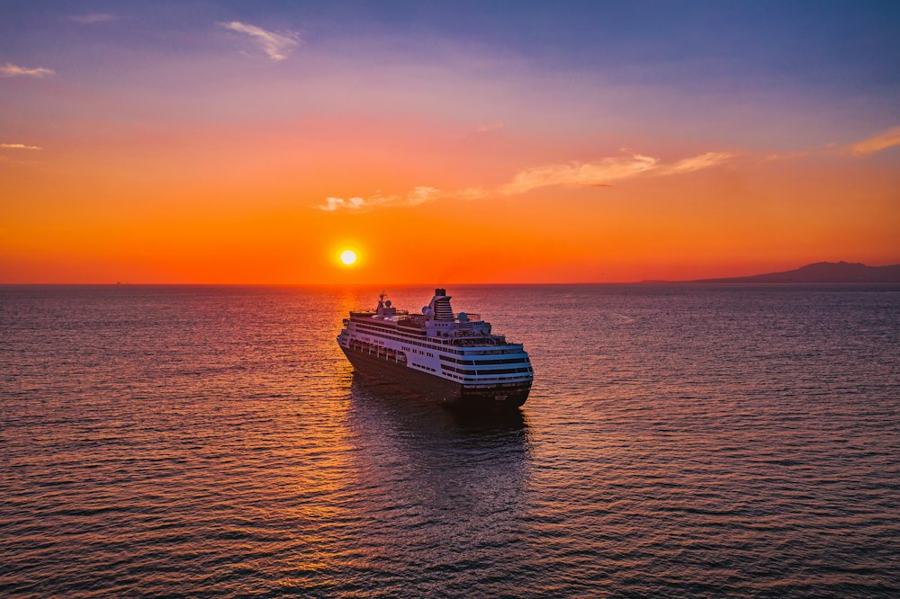
Cruise ship at sea at sunset
Cruise shipsContracts on board in dining, bars, galley and guest services.
Restaurant dining room with set tables and pendant lights
RestaurantsService, bar and kitchen teams for busy dining rooms.
How it works

From application to first day

The process is short, and you always know the next step.

Candidates

  1. Apply onlineSend your details and CV. It takes about five minutes.
  2. InterviewWe talk through your experience, languages and the kind of contract you want.
  3. Get matchedWe put you forward only for roles that fit your profile.
  4. Prepare to startWe help with documents, medicals and what to expect on day one.
Apply now
Employment opportunities

Available positions

Waiter serving guests at a dinner table

Restaurant Service

Restaurant service on board cruise ships involves delivering high-quality dining experiences to guests in a fast-paced, multicultural environment. Crew members take orders, serve food and beverages, keep their areas clean and give excellent customer service while following strict hospitality standards.

Apply today

Bartender straining a cocktail

Bar

Bar service on board cruise ships involves preparing and serving beverages while giving excellent guest service, keeping high hygiene standards and actively upselling to enhance the guest experience and onboard revenue.

Apply today

Chefs plating salads in a kitchen

Culinary

Culinary staff on board cruise ships prepare and present high-quality meals in line with company standards, recipes and international food safety regulations. The role means long hours in a demanding, fast-paced, multicultural environment, with consistency, efficiency and strict adherence to United States Public Health (USPH) standards at all times.

Apply today

Housekeeper making a hotel bed

Housekeeping

Housekeepers keep guest cabins and public areas on board clean, sanitised and well presented. The role needs attention to detail, efficiency and the ability to work long hours in a fast-paced, multicultural environment, strictly following United States Public Health (USPH) standards.

Apply today
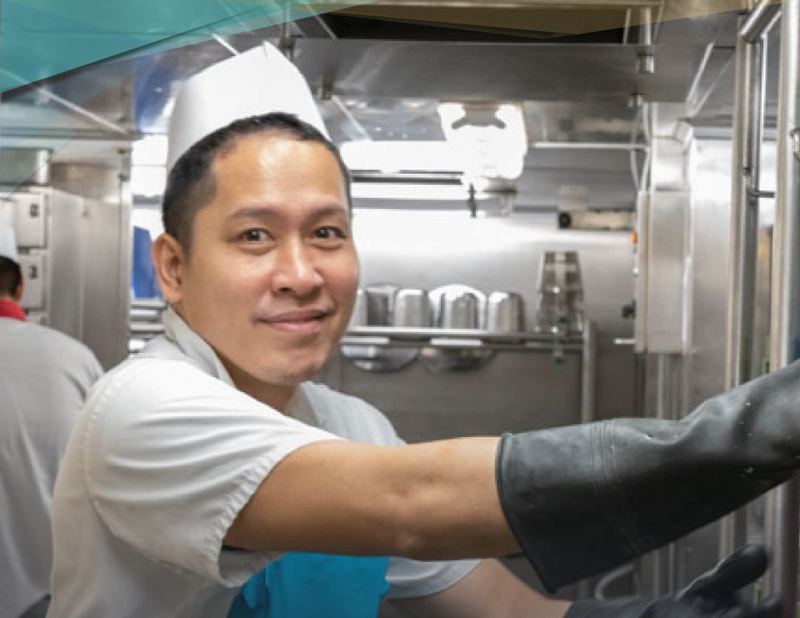
Galley steward in a stainless steel kitchen

Stewarding

The Stewarding team keeps all galley and food service areas clean, sanitised and organised. It supports the culinary and restaurant teams by making sure all equipment, utensils and workspaces meet the highest hygiene standards and USPH regulations. The work is physically demanding, with long hours in a fast-paced environment.

Apply today
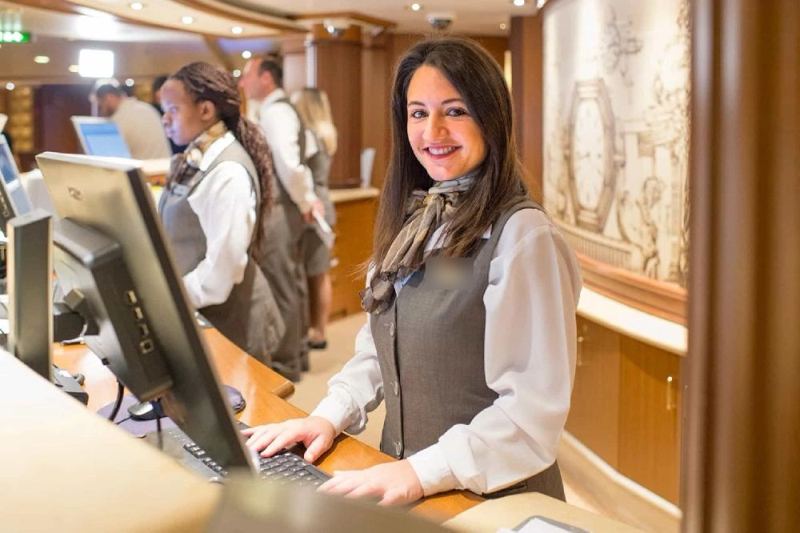
Front desk associate at a reception counter

Guest Services

The Guest Services Associate is the main point of contact for guests: handling questions, complaints, onboard accounts and special requests, and supporting embarkation and daily front desk operations. You need strong English, previous hospitality or customer service experience and good problem-solving skills. Contracts are typically 6–8 months, 7 days a week, with shared accommodation on board.

Apply today

Performers on stage in front of a large audience

Entertainment

Entertainment Staff deliver a fun, high-energy guest experience: hosting activities, leading games and events, acting as MCs and supporting shows and themed parties. You need confident public speaking, an outgoing personality, fluent English and the ability to work long hours, 7 days a week. Experience in entertainment, hospitality or performing arts is preferred; dancing, acting or fitness skills are an advantage.

Apply today

Youth staff member playing with children

Youth Staff

Youth Staff create a safe, fun and engaging environment for children and teenagers, planning and leading games, sports, arts and crafts and themed events. They supervise participants at all times, follow strict child-protection policies and keep in touch with parents. You typically need 2–3 years of experience with children and strong English (B2+). Contracts are 6–8 months, 7 days a week, with shared accommodation.

Apply today
Officer helping guests at a desk

Finance

The onboard Finance team manages accounting, budgeting, revenue control, payroll and financial reporting, and oversees cash handling and onboard revenue such as retail, casino and food and beverage. Candidates typically hold a degree in Finance or Accounting, have 3–5 years of experience in financial management (ideally in hospitality or cruise) and advanced English. Contracts are 4–6 months, 7 days a week.

Apply today
About us

Who we are

Our team

Our recruitment specialists are experienced hospitality professionals with strong customer service backgrounds and in-depth knowledge of hotel, restaurant and hospitality operations. That experience lets them spot qualified candidates and match them with employers who value service excellence.

Success in hospitality depends on preparation. That is why MARORT works closely with training partners and industry professionals, so candidates arrive ready for the challenges and standards of the global hospitality industry.

We interview and support candidates in English, Spanish and French, from the first call to the first day.

Our vision

To be a renowned company and a leader in hospitality job opportunities in every region where MARORT is represented, with a focus on emerging and demanding markets in one of the fastest-growing travel industries.

Our mission

To support the growing talent needs of the hospitality industry by attracting and sourcing qualified candidates for international opportunities at sea and abroad, with the highest standards of quality, service and professionalism.

Our core values

Service

Outstanding service at all times, and we keep checking how well we deliver it.

Honesty

The highest standards of honesty and integrity, and an ethical, open approach with everyone we work with.

Equal opportunity

Every qualified candidate is given a fair chance, whatever their background.

Our commitment

Our quality management system is certified to ISO 9001:2015.

MARORT and all our partners support the principles of the United Nations Universal Declaration of Human Rights. We do not tolerate modern slavery, child labour, forced labour or human trafficking, and candidates never pay recruitment fees.

FAQ

Frequently asked questions

Can't find your answer? Write to us and we'll help.

1What is the minimum age requirement to work on a cruise ship?

The minimum age may vary depending on the cruise line. Some accept candidates from 18 years old, as long as the position does not involve serving alcoholic beverages. For positions in the Bar Department, the minimum age is 21.

2What type of job openings do you offer?

Job openings depend on the needs of cruise lines, hotels and restaurants. MARORT pre-selects candidates for positions such as:

  • Culinary Department (Chefs, Cooks, Galley Stewards)
  • Restaurant & Food Service
  • Bar Department
  • Housekeeping
  • Guest Services
  • Shore Excursions
  • Entry-level positions in Deck & Engine departments
3Do you offer summer or seasonal jobs?

Most cruise ship positions are offered on a contract basis, typically from 4 to 9 months depending on the cruise line. Hotel or restaurant contracts abroad may last up to one year. Some cruise lines may offer seasonal positions, such as Youth Staff or Youth Counselors.

4What experience or skills are required to work on a cruise ship or abroad?

Your experience must match the job description of the position you apply for. All candidates must:

  • Have at least an intermediate level of English
  • Pass interviews conducted in English
  • Complete an English Marlins Test (may have a cost)

A second language can increase your chances of employment.

5What education or training qualifications are required?

Hospitality studies, technical programs or university degrees are beneficial. However, most positions require at least one year of professional experience in the relevant field. Some specialised positions (such as Youth Staff) may require:

  • A degree in Education, Psychology or a related field
  • CPR certification
  • At least three years of experience working with children
6Do I need maritime certificates such as STCW?

Some cruise lines require STCW (Standards of Training, Certification and Watchkeeping) certificates. Your MARORT Recruitment Specialist will tell you if they are required for your position. Candidates for the Deck or Engine departments must always have STCW certifications.

7How long does the recruitment process take?

It varies with the position and cruise line demand. On average the process takes between 3 and 8 months, depending on:

  • Availability of positions
  • Completion of interviews
  • Medical examinations
  • Visa processing
  • Background checks
8How do I get hired?

To begin the process:

  • Register with MARORT
  • Submit your resume and application
  • Complete the pre-screening interview
  • Pass language and skills evaluations
  • Take part in employer interviews
  • Complete onboarding requirements

More details will be given once you have been pre-selected and approved.

9What visas are required?

Unless you are a US citizen or resident, or Canadian, you will need a C1/D transit and crewmember visa in your passport. It is a non-immigrant visa for anyone entering the United States as a crewmember to join a cruise ship. If you need a visa for other countries on the ship's itinerary, or to travel to the country of a hotel or restaurant offering you a contract, our Crew Processing Coordinator will tell you when your assignment and travel date are confirmed. MARORT may offer optional visa assistance through one of its business partners.

10Do I need a medical examination?

Yes. Employers require a Fit-for-Duty medical certificate. MARORT will tell you where to go for a pre-employment medical examination near you, if available. Cruise lines have approved clinics and doctors in every region they recruit from, and you must use one of them. All tests must show you are fit for duty before you travel to your ship or post abroad. The cost varies by country and is paid by the employee. You must carry your original medical results and present them to the medical facility when you join the ship.

11How much money will I earn?

Your MARORT Recruitment Specialist will tell you your salary and contract conditions before you travel. The salary depends on the position you qualify and are approved for. You are responsible for any taxes due in your country of origin. Some companies deduct taxes directly from wages, depending on their agreements with the government collecting them.

12How would I get paid and in what currency?

Cruise lines usually pay crew twice a month in US dollars; if you will be paid in another currency, your Recruitment Specialist will tell you. Wages are paid by direct deposit to a bank account opened by the cruise line in your name, and you can make transfers online and withdraw with a debit card. Hotels and restaurants pay in their local currency directly to you.

13Are married couples placed on the same ship?

You can request it, but it is never guaranteed that you and your spouse will be scheduled to the same ship.

14How would I learn about the responsibilities of the job I qualify for?

During the initial screening, your Recruitment Specialist will give you a job description for the position you are qualifying for.

15Would I get any training once I start my new job?

Time is of the essence: once you join your ship, hotel or restaurant, you are expected to start performing soon after you put on your uniform. If you do not hold STCW-95 certifications, the cruise line will provide the safety training required by international maritime law, where it offers that training. You will also get quick on-the-job training and training in ethics, company culture, service and intercultural awareness, plus any training from your supervisor or the training and development team.

16Would I get paid for mandatory safety training?

Mandatory training is part of your duties, so no extra compensation or overtime is added to your regular wages.

17Will I get paid overtime?

Your Employment Agreement will state how many hours you work per week and whether your position is paid for overtime. Overtime rates vary by position. You must always log the hours you actually work.

18Would I have to pay income tax in the countries the ship visits?

No, unless you are legally linked to one of those countries and the law requires you to file income tax there. Some cruise lines automatically deduct federal taxes from the wages of crew who are US citizens or residents.

19How can I send money home?

It is quick and easy. On most cruise ships the crew office offers wire transfer and money order services; to wire money you need the full details of the receiving bank. Both services carry a small fee. Ask at the crew office for details.

20What law applies to the contract I sign when joining the ship?

In most cases a cruise line contract is written and issued in line with international maritime law. In some cases it may be tied to the ship's flag or to the country the cruise line operates from.

21Who pays for my flight to the ship or place of work, and back home?

Travel to join the ship, or to the city where your hotel or restaurant is, and back home at the end of your contract is paid by the employer. A cruise line may fly you from the nearest approved airport if your city's airport is not on its list. Hotels and restaurants may pay for your first ticket and deduct it from your salary in equal monthly amounts.

22Do I need to buy any uniforms?

Most positions require a uniform, and all or part of it may be at your expense. If so, it is charged to your onboard account, which you must settle at the end of each payroll period. During onboarding you will be told if you need to pack any uniform items, whether you join a cruise ship or a hotel or restaurant abroad.

23How would I clean my uniform and personal clothing?

All cruise ships have a laundry on board, and uniforms are usually cleaned free of charge; you may be charged for personal clothing, including uniform pieces without a company logo. Most ships also have self-service crew laundries with washers and dryers (a small fee may apply).

24What expenses would I have on board?

Your expenses will be small, but you will have personal costs such as phone calls, internet, postage, laundry for personal clothing and purchases at the crew bar or shop, or in guest venues if your position allows it. Room and board are free on a cruise ship; at a hotel or restaurant it depends on the employer and your agreement.

25What happens if I get sick on board or abroad?

Tell your supervisor as soon as you feel sick or in an emergency. All cruise ships have an emergency number that connects you to the medical facility on board. After a shipboard doctor examines you, you will either be given rest time or referred to a doctor at the next port. Most cruise lines cover illness while you are under contract on board, but check the medical coverage with the medical facility or Human Resources on board.

26Do I get dental coverage?

Dental coverage on board usually covers only emergencies and extractions. Check with the medical facility or Human Resources for details.

27Is there a probation period?

Yes. Cruise lines and hotel or restaurant employers usually have a 90-day probation period, which may vary with your contract. During it your supervisor reviews your abilities and performance, and your contract may be ended without notice if your performance is not satisfactory.

28What accommodation would I get on board or abroad?

Accommodation depends on your position and rank. Depending on the cruise line, you may share a cabin with one to five team members, usually from your department; officers, managers and supervisors have single cabins. Cabins do not always have a window or porthole.

29How long is a working day?

Expect to work at least 70 hours a week, or as set out in your Employment Agreement. You may be asked to work overtime and, if your position qualifies, you will be paid for all hours beyond those in your agreement.

30Who would I work with?

People of many nationalities, cultures and backgrounds. Treat all your co-workers with respect and courtesy, be fair and value the diversity of working on a cruise ship or in another country.

31Would I be able to spend time off the ship?

Yes, depending on your work schedule. Your supervisor will give you a weekly or voyage schedule of working hours and time off, which usually rotates.

32Would I be allowed to visit guest areas on board?

Usually only for work-related duties. Some positions may visit guest areas off duty, in uniform or the dress code of the day. Guests always have priority anywhere on board. Visiting guests in their staterooms is prohibited and grounds for dismissal unless approved in advance by the captain.

33What documents would I need?

Once an employer has accepted you and given you an assignment and joining date, you will need these documents before leaving your country:

  • A Letter of Employment from MARORT or the employer (it may come by email). It is the most important document: you need it for visas, at the airport, for the authorities at departure and arrival, at the hotel and when you board the ship.
  • A passport valid for at least one year, and a Seaman's book if you hold one. MARORT will tell you if a Seaman's book is required and help you obtain it.
  • All required visas, obtained before departure and valid for at least one year. MARORT will tell you which visas you need and how to apply.
  • Fit-for-duty medical certificates signed by the employer's approved doctor, with all test and X-ray results.
  • All professional certificates or licences.
34Are there prospects for career advancement?

Cruise lines often offer training courses and cross-training programmes that can lead to promotion. Opportunities on cruise ships are extensive; it depends on you and the direction you want your career to take.

35How am I rewarded for years of service with the same company?

It depends on the company, but many cruise lines offer crew benefits such as service rewards, life insurance and retirement plans.

36How can I stay in touch with family and friends?

Easily. Most ships have crew internet access, some in cabins or as Wi-Fi in crew areas, and you can buy phone cards to call from on board or in port. Fees apply to these services.

37How can I receive mail from home?

Mail goes to a central address given by the cruise line or employer and is then delivered to your ship or workplace. Give your family the full address, including the ship or workplace name and your position.

38What should I pack once assigned to a ship?

Pack lightly: cabin space is limited. Bring toiletries for the first few weeks only, since you can buy more on board or in port. You will be in uniform about 85% of the time, so keep clothing to essentials. Other useful items include an alarm clock, prescription medication, camera, laptop, tablet, phone and hair dryer. Everything should fit in one checked bag and one carry-on.

39What should I prepare before leaving home?
  • Once your medical and visa requirements are complete, your Recruitment Specialist will guide you through every step. It is your responsibility to arrive at the ship or city on the date and time on your Letter of Employment.
  • Label your luggage with your name and address, and check the airline's weight limits and allowed items. Keep to one checked bag and one carry-on.
  • Your Crew Processing Coordinator will give you the exact joining city and port, and how to get to your hotel or the ship from the airport.
  • You will have out-of-pocket expenses until your first pay, so carry at least US$200–300 in cash or card, or the equivalent in local currency.
  • If the employer provides your joining ticket, it is issued only after your medical is approved, your visas are issued and your police clearance is complete.
40What if I want to go home before the end of my first contract?

First talk to your supervisor and, if available, the Human Resources Manager about why you want to leave. If you still want to go home, you will be asked for a resignation letter, and you will have to pay for your flight home and all repatriation costs before signing off. Please give at least two weeks' notice.

41What does MARORT offer me as my hiring partner?

Once you register and complete our pre-screening form, you get:

  • Experienced Recruitment Specialists who introduce you to the cruise and hotel industry and the protocols to know before you travel.
  • Help building your resume or CV so your experience and skills are well presented (a fee may apply for this service).
  • Guidance on each employer's standards of conduct.
  • One-to-one consultations to answer your questions and make sure you know all policies and procedures.
  • Contact after you travel, to answer questions and hear how you are settling in.

Your feedback is very valuable to all of us at MARORT. If you have questions we have not covered here, email your Recruitment Specialist.

42Do I pay a commission or fee to apply, be processed or be placed?

No. MARORT does not charge any commission or fee for applying, processing or placement. Some optional services have a fee, and you will always receive a written disclosure before paying for any of them.

Contact

Let's get started

Tell us what you're looking for. We read every message and reply as soon as we can.

  • No recruitment fees for candidates.
  • Your details are only shared with your consent.
Or write to us directly
Claudia Marinclaudia@marort.co